
Restoration as Basebuilding
The New World Struggles To Be Born

We live in an age of profound despair. The dual unraveling of our social body and our habitable climate diminishes our present and destroys our future. For many the magnitude of this polycrisis is difficult to consider, and a common response among young people is adopting an attitude of fatalism and avoidance. Many have resolved to not have children.
In this context, it’s unsurprising that widespread climate organizing has failed to thrive this decade. Prior to 2020 the movement felt massive - but has failed to recover post-COVID despite accelerating climate catastrophes. I don’t believe this is a coincidence - the COVID pandemic showcased the worst of our society in ways that made it hard to believe that systematic change for the better was possible. The elite willingness to sacrifice lives in the name of economic expediency was chilling, a feeling that has only grown more acute since - especially after witnessing widespread elite complicity with genocide in Gaza.
There is a security in resignation, it is more uncomfortable to consider a future where humanity survives and our actions still have consequences. As bad as current climate projections are, they have on average improved considerably over time - going from apocalyptic to ‘merely’ disastrous. The climate crisis is already here, but it is not too late to mitigate substantial harm to ourselves and our biosphere - every .1C of warming prevented may have significant implications. As a stage 4 cancer survivor, I don’t believe that quitting prematurely is a worthwhile strategy. We owe it to ourselves and to future generations to fight.
A Quest For Meaning
Due to the scale of the problem and the massive investment in infrastructure required for electrification and decarbonization, it frankly cannot be addressed without state intervention. This, combined with the general sense of urgency and dread climate change evokes, creates unique challenges for rebuilding the climate movement.
Traditionally the first steps to organizing people involve identifying initial actions they can take to contribute, but those actions need to feel meaningful or people will stop engaging. To use an example - NYC-DSA’s electoral campaigns are effective at recruiting and developing new organizers because they center straightforward first steps such as canvassing which clearly contribute to campaign goals. By contrast - tactics such as phonebanking and tabling for legislative campaigns often diminish over time because the path to them affecting change is so remote that people lose faith that they matter.
Even ultimately successful climate campaigns run into this issue - I ran a large member onboarding operation for the Public Power campaign, but we often struggled to identify what people should be doing even during the peak of the campaign. In many ways the Public Power campaign was won through organizers developing specialized skills including comms, lobbying and strategy. We were effective at building a strong core of cadre through the campaign, but struggled to keep people who were less committed engaged. This tension was resolved when we ‘electoralized’ climate as an issue by running primaries against conservative democrats highlighting climate as a key issue, but electoral races happen on a fixed time table and our approach is not always replicable.
These problems are also exacerbated for climate specifically because it is a combination of dread inducing but also slow. While major responses such as the wave of Palestinian solidarity organizing following the start of the Gaza genocide risk burning out - they can draw in tens of thousands of people at least in the short term. The implications of climate change are extremely grim, but they are playing out over a period of decades and often don’t provoke the same urgency. To make things worse, the idea of taking personal responsibility for addressing one’s carbon footprint is literally a fossil fuel industry talking point, so many of the ways people ‘do their part’ aren’t truly conducive to building a mass climate movement. The question remains - outside of electoralism how can we keep people consistently involved?
When Socials Aren’t Enough
Socials and spectacles are at this point widely accepted by socialist organizers as an effective way to engage a membership base. This works especially well for DSA - a big tent party-like organization anchored by a strong electoral program. There is a strong case that participating in DSA’s social life is beneficial to DSA - which then implies participation is therefore a contribution in its own right, albeit a humble one. Ultimately it is the political character of DSA itself that gives associated socials meaning. In this way, the success of NYC-DSA’s Membership Committee, for example, is contingent on the political character of NYC-DSA to elevate its work to be more than ‘just’ people hosting coffee meetups. I believe this is a primary reason why the events we run which don’t qualify as spectacle are still often well attended1.
A social-oriented approach can work for campaigns or sub-bodies of organizations such as DSA working groups, but faces more conceptual tension. DSA usually has work that needs doing, especially canvassing for electoral campaigns, so people can alternate between socials and work. The sense that social events are inherently important is diluted when there isn’t work to do - even for people who aren’t drawn to doing the work themselves. While many DSA working groups successfully utilize strategy as part of their engagement strategy2, if there aren’t ways to connect outside of social events even people who would stay in DSA may drift off in favor of other working groups.
While I have primarily focused on DSA as it is where I spend most of my time organizing, by most accounts these issues are worse outside of it. Most climate organizations operate on a more or less standard ‘nonprofit model’ where organizing is primarily led by staff. This further limits ways in which volunteers can engage, and the lack of a leadership pipeline blocks opportunities to develop reciprocity which DSA’s membership driven organizing benefits from. Sunrise Movement, one of the most member-driven climate organizations, famously collapsed in part due to growing tensions over what many members felt was a lack of democracy in practice - further compounded by internal disagreements about its conciliatory approach to the Biden administration.
Restoration as Basebuilding
While there are numerous ways to address the issue of engaging climate organizers3, an approach I feel has potential is adopting an additional focus on ecosystem restoration and mitigation.
Ecosystem restoration has the potential to support the climate movement because it is a much more ‘hopeful’ issue than the climate crisis. While biodiversity continues to decline, it is possible to restore or at least mitigate the damage to many ecosystems. Ecosystem restoration is a positive focus because it often works - after the removal of the Klamath River Dam local salmon populations began to boom. While many species are at risk due to climate change, they are often at risk due to the additional stress of habitat loss. In instances where local climates have diverged too significantly from the baseline mitigation is often still viable, and still contains a hopeful message about our ability to reshape our relationship with the natural world. Restoration and mitigation are also essential climate goals in their own right as functioning ecosystems also often act as carbon sinks. In fact a large amount of excess emissions are due to poor land use - so much so that carbon sequestration in the form of land use improvements are a major component of many net-zero models.
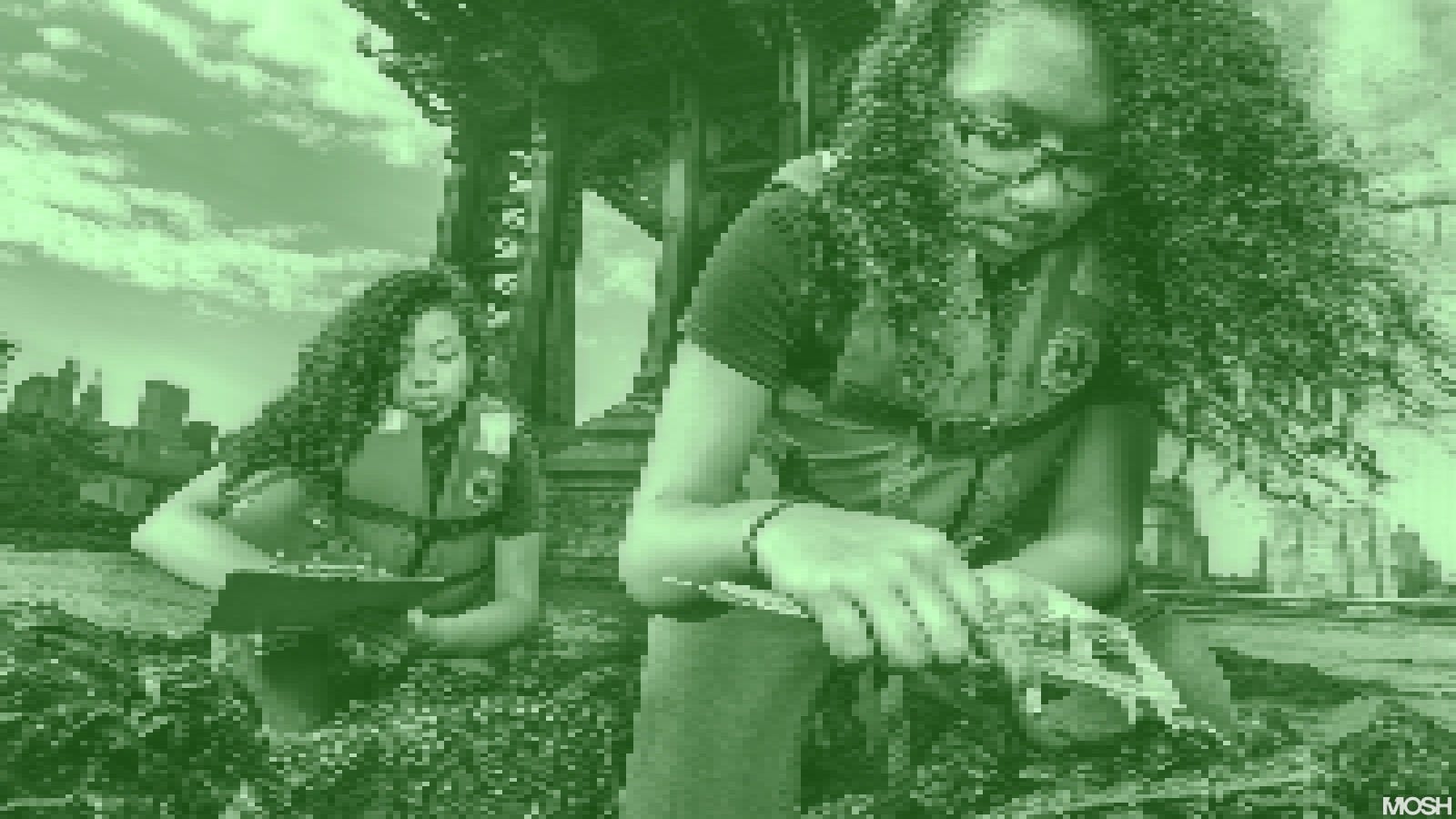
The work of ecosystem restoration is also potentially more ‘accessible’ than organizing around the climate crisis. Local parks and conservation programs offer a way to get involved locally and make a visible difference in a way that a pure decarbonization often doesn’t. In NYC for example we have initiatives like the Billion Oyster Project as well as a Parks Department which has organized a large volunteer base to assist with managing parks, planting trees and other key work. This can make the sense of meaning associated with this work stronger than just attending rallies, which is likely to incentivize participants to stick around longer and provide more opportunities to plug into higher-complexity climate organizing needs such as comms, lobbying and strategy.
It is important to distinguish this approach from calls to focus on mutual aid, which is in many cases a strategic misstep4. If the goal is to create ‘accessible meaning’ for climate organizers - the logic of Mutual Aid is self-defeating in that it is actually a negation of the logic of meaningful climate action.The scale of climate action requires massive state intervention, and under capitalism we do not own the means of production and cannot replace the state. Charity can still help people and rapid response has often shown to be a beneficial tactic - but when rebuilding from disaster mutual aid cannot be a substitute for FEMA funding. In this way mutual aid teaches the wrong lesson, and while intended to be empowering it clouds our strategic vision. Furthermore because mutual aid cannot meet a scale required to affect meaningful change, mutual aid work will forever be a drop in the bucket. This is completely fine, charity is still a moral good - but when many organizers realize this they become dispirited and the ‘meaning’ that previously attracted them slips away.
This is also not an argument for switching purely to ecosystem conservation as a focus, merely that is a blind spot we can improve on. The core of our work as ecosocialists should remain pressuring the state to decarbonize through any means necessary. We also should remain precise with our messaging to not fall into the same trap as mutual aid - we cannot affect more than at best hyperlocal change by trying to go it alone. It is necessary to highlight the ways in which the state is required for ecosystem restoration at scale, and the ways in which existing state resources such as the Parks Department enable us to do this work. Engaged citizenry working with and through the government is a fundamentally different message from a do it yourself approach - and would be a necessity for a functioning democratic socialist society.
Creating opportunities for positive action oriented towards a mass base is vital because it reverses the logic of our current era of collapse. It shows that we are not content to accept decline, that we can improve ourselves and our world at the same time. While this approach would be a drop in the bucket - responding to polycrisis with a holistic solution rooted in education, betterment and community is far more likely to build lifelong climate organizers than doomscrolling.
There is more to be said about this - it is explicitly not an endorsement of approaching organizing like a makework project. The socials fill a valuable niche within a movement ecosystem when that ecosystem is healthy, but aren’t sufficient to keep it healthy. The deeper question, one which this essay touches on but only at surface level, is the sense of ‘meaning’ to the work which has the potential to draw people to it in large quantities.
Such as the Anti-War Working Group balancing the Break The Chain campaign and frequent movie nights and seminars.
Including reshaping how we approach legislative campaigns, something which I hope to broach in future essays.
Not to mention the fact that almost all mutual aid projects are better considered charity. My critique should be understood to be directed at this approach to ‘mutual aid’ - though it is up to the reader to decide if their pet project is truly different.
Brilliant reframing of how to keep climate organizers engaged. The distinction between ecosystem restoration and mutual aid is sharp, restoration actually requires state capacity while mutual aid subtly implies we can sidestep it. I saw this dynamic play out in a local enviromental group where people burned out fast from feeling like charity work, but when we partnered with Parks Dept on native plantings the energy totally shifted becuase progress was tangible.
Strongly agree!